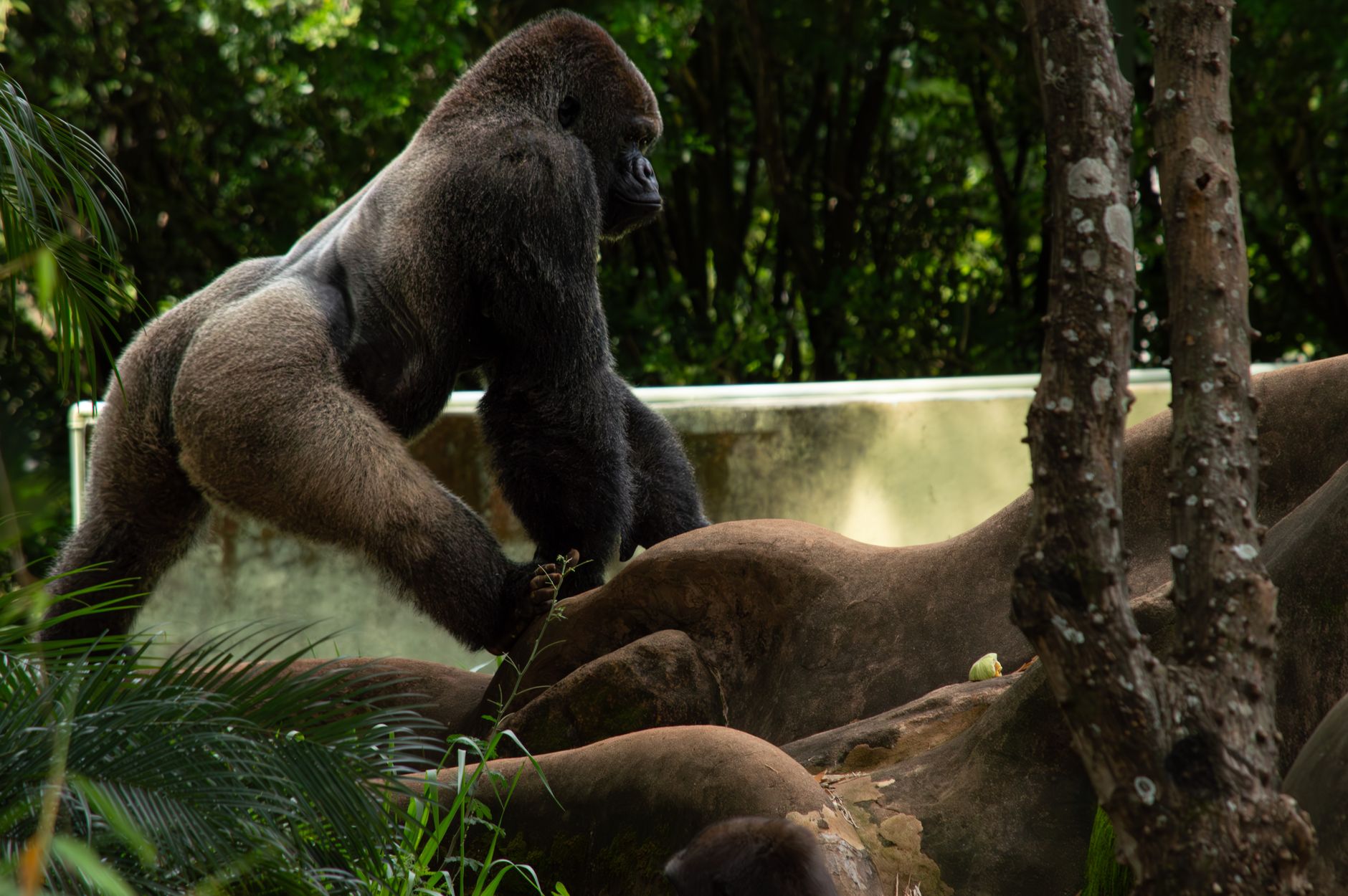
Rwanda’s Volcanoes National Park and Uganda’s Bwindi Impenetrable National Park are the two great mountain gorilla staging grounds in East Africa. If you are deciding between them, the volcanoes vs bwindi gorilla experience question comes down to how you want to travel. It is not just about where the gorillas live. This comparison sorts out the permits, trails, access, and the broader safari options around each park.
Which Gorilla Experience Is Better, Volcanoes or Bwindi?
Choose Volcanoes for easier logistics, more predictable trails, volcanic scenery, and a polished luxury trip. Choose Bwindi for a lower permit cost, denser rainforest, more trekking sectors, and a wilder sense of discovery. The gorilla encounter itself is exceptional in both parks, so the better choice depends on whether convenience or immersion matters more to you.
| Factor | Bwindi Impenetrable NP (Uganda) | Volcanoes NP (Rwanda) |
|---|---|---|
| Standard international gorilla permit | $800 | $1,500 |
| Habituation experience | $1,500 in Rushaga sector | Not usually offered |
| Trail conditions | Steep, muddy, dense rainforest | Often clearer trails on volcanic slopes |
| Typical entry from international airport | Long drive from Entebbe, or a flight to Kihihi or Kisoro plus a drive | About two to three hours by road from Kigali |
| Trekking sectors | Buhoma, Ruhija, Rushaga, Nkuringo | Trailheads across the park |
| Wildlife beyond gorillas on a wider trip | Chimpanzees, Queen Elizabeth NP, tree climbing lions | Golden monkeys, Virunga landscape, Akagera or Nyungwe extensions |
In short, Bwindi offers more forest and a lower up-front cost. Volcanoes offers an easier route and a more polished base.
How Much Does a Volcanoes vs Bwindi Gorilla Experience Cost?
For international visitors, a standard gorilla permit is generally $1,500 in Rwanda’s Volcanoes National Park and $800 in Uganda’s Bwindi. That makes Bwindi $700 cheaper before transport and lodging. Bwindi also offers a roughly four hour habituation experience in Rushaga for $1,500, an option not normally available in Volcanoes.
Transport and lodging can eat into that $700 saving. The drive from Kigali to Volcanoes National Park is around two to three hours, so you may only need two or three nights near the park. Bwindi often involves a long road transfer from Entebbe or a domestic flight, plus longer distances to other Ugandan parks. A gorilla trekking permit cost comparison only tells part of the story.
Your permit fee also funds ranger patrols, veterinary work, and community programs in both countries. Treat the permit rules seriously, because your money supports the gorillas you came to see.
Check the current gorilla trekking permit cost before you commit. Government rates rarely change, but tour operators can confirm the number and any booking fees. For permit details beyond the headline price, read our side-by-side look at Bwindi vs Volcanoes permit costs.
Is Gorilla Trekking Easier in Bwindi or Volcanoes?
Volcanoes usually offers shorter, clearer treks through more open bamboo and volcanic slope terrain, often taking about one to four hours. Bwindi is more likely to involve steep, muddy, densely vegetated trails and longer, less predictable hikes. Neither destination is effortless. The assigned gorilla family, weather, altitude, and recent movements all shape the actual difficulty.
Volcanoes National Park gorilla trekking tends to be more contained. Still, expect altitude and some uneven ground. Bwindi gorilla trekking is often rougher underfoot, but not every route in Bwindi is brutal. Some families rest close to trailheads in both parks.
Season makes a difference. In Bwindi, book the drier windows roughly from June to September and December to February if you want the best chance of firmer trails. Rain can arrive at any time in the Virunga mountains around Volcanoes, so a good rain jacket matters more than chasing a perfect forecast.
For a deeper trail level breakdown, see our comparison of Bwindi vs Volcanoes trek difficulty.
Can You See More Gorillas in Bwindi or Volcanoes?
Bwindi generally offers more habituated gorilla families across four sectors, while Volcanoes has fewer available groups and a more concentrated trekking system. More Bwindi sectors can improve itinerary flexibility, but travelers must choose the sector carefully, since road access, accommodation, altitude, and trail character vary substantially.
Both parks typically leave you about an hour with one habituated family, so Bwindi does not give you a bigger audience. Its advantage is choice. Buhoma sits in the north and is the easiest sector for many lodges. Ruhija is quieter and higher. Rushaga is the sector where you can book the gorilla habituation experience. Nkuringo offers dramatic ridge views and a more demanding approach.
Volcanoes has fewer trailheads, which can mean lower last-minute flexibility. For a one-off trek, that rarely matters. For a longer gorilla-focused trip, Bwindi is easier to shape around your fitness level, lodge style, and available permits.
How Do Access and Safari Logistics Compare?
Volcanoes is the simpler option for a short trip because the park is roughly two to three hours by road from Kigali International Airport. Bwindi requires more planning from Entebbe, commonly involving a long road transfer or a flight to Kihihi or Kisoro followed by a drive. That extra travel is worthwhile when Uganda’s broader wildlife circuit is part of the plan.
This is where the volcanoes vs bwindi gorilla experience decision connects to a wider safari. Travelers often combine gorillas with Kenya’s Masai Mara and other classic East African parks.
With Volcanoes, you can reach Kigali from Nairobi and then drive to the park without long internal transfers. That makes Volcanoes practical for a short Kenya-Gorillas itinerary. With Bwindi, a Kenya-Uganda route usually means flying through Entebbe or organizing a longer road transfer. That is not a problem if you also want chimpanzee trekking or Queen Elizabeth National Park, but it changes the pace.
Use our East Africa safari budget breakdown to see how the permit cost fits alongside flights, lodging, and your Kenya safari days.
Which Destination Wins for Your Safari Style?
If you value ease, polish, and an itinerary that starts in Kigali and connects quickly to Kenya, Volcanoes wins. If you value lower cost, a wilder forest, and a broader Uganda wildlife itinerary, Bwindi wins.
Let the rest of your trip decide. Permit prices matter, but flights and lodging often matter more. Once you know which park matches your travel style, compare safari operators on FindMySafari or Valley Safaris. You can also ask Trunktrails Safaris directly to browse packages that include either gorilla destination. You can also start planning with TouringInsights at touringinsights.com.
Where Can You Find More Safari Planning Resources?
- Kenya national parks map from SafariPure
- Nairobi to Maasai Mara route guide from Valley Safaris
- Compare Kenya safari packages on FindMySafari